- Home
- Who We Are
- Treatment Programs
- What We Treat
- Resources
- Get Started
If you’ve ever wondered why someone can stop using for a little while, then slip right back into old patterns even when they really want to stay sober, you’re not alone. For many people, the missing piece is something they didn’t even know they were dealing with: a mental health condition happening alongside substance use.
That combination has a name. It’s called dual diagnosis, also known as co-occurring disorders. And understanding it can be a turning point in recovery.
Dual diagnosis treatment matters because it doesn’t force people to choose between “mental health help” and “addiction help.” It recognizes that both are connected, and treating one without the other often leads to frustration, relapse, and a lot of unnecessary shame.
Let’s break it down in a simple, real-world way.
A dual diagnosis means a person is experiencing:
These conditions can show up at the same time, or one can develop after the other. Either way, they tend to interact and intensify each other.
For example:
This doesn’t mean a person is “broken” or “too complicated.” It means their brain and body have been trying to cope the best way they know how, even if it comes with serious consequences.
Dual diagnosis can involve many different mental health conditions. Some of the most common we see include:
Sometimes people come into treatment already diagnosed. Other times, symptoms have been masked by substance use for years, and the mental health piece only becomes clear once the body starts stabilizing.
Dual diagnosis is common because substance use and mental health issues are often connected in multiple ways, including:
A lot of people don’t start using substances because they want chaos. They start because something hurts, mentally or emotionally, and using brings temporary relief. It can feel like the only “off switch” for racing thoughts, grief, trauma memories, or intense mood swings.
Alcohol and drugs affect mood, sleep, motivation, memory, and emotional regulation. Over time, they can create symptoms that look like mental health conditions, or worsen existing ones.
Genetics, chronic stress, childhood adversity, trauma, and unstable environments can increase risk for both mental illness and substance use disorder.
In early recovery, people can feel anxious, depressed, irritable, foggy, or emotionally raw. That doesn’t automatically mean someone has a mental health diagnosis, but it does mean they need support and careful assessment.
Here’s the hard truth: if you treat addiction but ignore mental health, you’re often leaving the biggest relapse triggers untouched. And if you treat mental health but ignore substance use, it’s hard for therapy or medication to “stick,” because substances can constantly disrupt progress.
This is why some people feel like they’ve “failed” treatment in the past. In reality, they might have been placed in a program that wasn’t set up to treat the full picture.
Dual diagnosis treatment aims to stop that cycle by treating both conditions in a coordinated way.
Dual diagnosis treatment isn’t just “add a therapy group and call it a day.” It’s an integrated approach, meaning the same treatment team and plan address both substance use and mental health together.
At Cedar Oaks Wellness Center in Oregonia, Ohio, we take a personalized approach to care because co-occurring disorders don’t look the same from one person to the next. Dual diagnosis treatment should meet you where you are, not force you into a one-size-fits-all box.
Here are some of the core components that are typically involved.
Good dual diagnosis treatment starts with understanding what’s actually going on. That includes:
It’s also important to reassess over time. Symptoms can change once substances are out of the system, and treatment should adjust accordingly.
If someone is physically dependent on alcohol, opioids, or benzodiazepines, detox can be an important first step. Withdrawal can be uncomfortable and, in some cases, dangerous.
Detox in a structured, supportive setting helps stabilize the body so the mental health work can begin from a safer baseline.
Dual diagnosis therapy is usually a mix of approaches designed to help you:
Depending on the person, treatment may include individual therapy, group therapy, psychoeducation, and skills-based work.
Medication can be a helpful tool for some people, especially when symptoms are severe or persistent. In dual diagnosis care, medication management should be handled carefully because:
The goal is never to “medicate someone into numbness.” The goal is stability, clarity, and a real chance to engage in recovery.
When mental health and addiction collide, everyday life can feel chaotic. A structured program can help restore basic rhythms that support healing, like:
Structure isn’t about control. It’s about giving your nervous system a break and helping your brain relearn what “safe and steady” feels like.
Recovery isn’t one moment. It’s a process. Many people do best when treatment follows a continuum of care, such as:
Having options matters because people’s needs change as they get stronger.
Not everyone with a substance use disorder has a mental health condition. But if these patterns show up, it’s worth getting a professional assessment:
If any of this sounds familiar, it doesn’t mean things are hopeless. It usually means you need a treatment plan that matches reality.
Dual diagnosis treatment matters because it supports recovery in a way that’s more complete and more sustainable.
When anxiety, depression, trauma symptoms, or mood instability improve, cravings often become easier to manage. You’re no longer fighting a two-front war with only half the tools.
A lot of shame comes from not understanding your own behavior. Dual diagnosis care helps connect the dots between emotions, thoughts, nervous system responses, and substance use patterns. That insight is powerful.
White-knuckling sobriety usually doesn’t last. Integrated treatment focuses on practical skills for distress tolerance, emotional regulation, communication, and relapse prevention.
Recovery is more than stopping a substance. It’s improving quality of life: relationships, self-trust, mental clarity, and a sense of direction again.
At Cedar Oaks Wellness Center, we provide comprehensive treatment in Oregonia, Ohio for substance use disorders and co-occurring mental health conditions. Our center offers dual diagnosis treatment as part of our range of services which include detox, inpatient, and outpatient programs in a supportive, structured environment with care tailored to each client’s needs, experiences, and recovery goals.
If you’re coming to us for dual diagnosis support, you can expect:
Most importantly, you can expect to be treated like a person, not a problem to manage.
If you think dual diagnosis might be part of your story, you don’t have to figure it out alone. The right help can make recovery feel less confusing, less exhausting, and a lot more doable.
Reach out to Cedar Oaks Wellness Center today to talk through what’s been going on, explore our detox, inpatient, and outpatient options, and find a treatment plan that supports both your mental health and your sobriety. Our team can also help you verify your insurance benefits quickly and confidentially, so you can better understand your coverage and any potential costs before starting treatment.
Dual diagnosis, also known as co-occurring disorders, refers to the presence of both a substance use disorder (such as alcohol or drug addiction) and a mental health condition (like depression, anxiety, PTSD, bipolar disorder, or ADHD). Understanding and treating dual diagnosis is crucial because these conditions are interconnected; treating one without addressing the other often leads to relapse, frustration, and unnecessary shame. An integrated approach to treatment can be a turning point in successful recovery.
Common mental health conditions that frequently co-occur with substance use disorders include depression (persistent low mood and hopelessness), anxiety disorders (generalized anxiety, panic disorder, social anxiety), PTSD and trauma-related disorders (flashbacks, emotional numbing), bipolar disorder (episodes of depression and mania), ADHD (impulsivity and difficulty focusing), personality disorders such as borderline personality disorder, and sleep disorders like insomnia. Sometimes these conditions are diagnosed before treatment; other times they become apparent only after stabilizing from substance use.
Many individuals turn to substances as a form of self-medication to temporarily relieve intense mental or emotional pain, such as racing thoughts, trauma memories, grief, or mood swings. Additionally, substance use itself alters brain functions related to mood regulation, sleep, motivation, and memory—sometimes creating or worsening mental health symptoms. Shared risk factors like genetics, trauma, chronic stress, and unstable environments also increase vulnerability to both mental illness and substance use disorder.
Treating only addiction without addressing underlying mental health concerns often leaves relapse triggers unaddressed—such as persistent anxiety, depression, trauma symptoms, or sleep problems—making sustained sobriety difficult. Conversely, treating only mental health issues while ignoring substance use can lead to medication interference, disrupted therapy sessions due to active use or withdrawal cycles, increased safety risks like overdose or self-harm, inconsistent progress, discouragement, and treatment dropout. Effective recovery requires coordinated treatment for both conditions.
Dual diagnosis treatment uses an integrated approach where the same treatment team simultaneously addresses both substance use disorders and co-occurring mental health conditions through a personalized plan. This contrasts with traditional treatments that focus on either addiction or mental health alone. Integrated care recognizes the complex interaction between these conditions and aims to provide comprehensive support tailored to each individual’s unique experiences and needs.
A quality dual diagnosis program offers personalized care that meets individuals where they are in their recovery journey without forcing them into one-size-fits-all solutions. Treatment includes coordinated therapies addressing both addiction and mental health symptoms together by a unified team. It may involve medication management, counseling for trauma or mood disorders, skill-building for emotional regulation and relapse prevention, and support for managing withdrawal symptoms—all designed to promote lasting recovery and improved overall well-being.
If you’ve ever watched someone bounce between addiction treatment and mental health care without getting real relief, you already understand the problem. When substance use and mental health are treated separately, important symptoms get missed, people fall through the cracks, and relapse risk climbs.
That’s exactly why dual diagnosis treatment matters. In plain language, dual diagnosis (also called co-occurring disorders) means someone is dealing with a substance use disorder and a mental health disorder at the same time.
A few common examples:
In this article, we’ll break down what dual diagnosis treatment actually includes, what levels of care can look like across Ohio, and how to choose a program that truly treats both sides of the issue together.
You’ll see a few terms used online, and they all point to the same core idea:
The reason this matters is simple. Substance use can worsen mental health symptoms, and untreated mental health symptoms can fuel substance use. This creates a loop that can feel impossible to escape:
There are also different timing patterns we see all the time:
This is why an integrated plan matters. Two disconnected plans often look like this: addiction treatment over here, mental health referrals over there, and the client stuck trying to hold it all together. Effective dual diagnosis care brings it under one coordinated approach, with one team and one clear plan.
Understanding the significance of dual diagnosis is crucial in addressing these intertwined issues effectively.
Co-occurring disorders can show up in a lot of different ways. Here are some of the most common mental health diagnoses we see alongside addiction, and what they can look like in day-to-day life and recovery.
Depression is not always obvious sadness. It can look like:
When depression is untreated, alcohol and drugs can become a fast way to feel something different, even if it’s short-lived.
Psychotic symptoms can include hallucinations, delusions, disorganized thinking, or paranoia. Substances can worsen these symptoms, and withdrawal can intensify confusion or agitation. Stabilization and consistent medication adherence are often key parts of treatment, alongside substance use recovery work.
BPD often involves:
Treatment usually needs structure, strong skills-based therapy, and a steady plan that addresses both emotional regulation and relapse prevention.
Not everyone has a formal diagnosis, but anger, irritability, and impulsive reactions can become major relapse triggers. Learning practical regulation tools, communication skills, and healthy conflict strategies can make a real difference. For many people, anger management classes can be a strong support alongside dual diagnosis care.
A lot of people wonder, “Do I really need dual diagnosis treatment, or do I just need to get sober?”
Here are a few signs that dual diagnosis support might be the right fit:
If any of this sounds familiar, the next step is not self-diagnosis. It’s a professional assessment so you can get clarity on what’s happening and what level of care makes sense.
Dual diagnosis treatment works best when it’s truly integrated, not split into separate tracks. Here are the core pieces that make a difference.
This means addiction and mental health are treated together with one coordinated plan. Everyone on the team is working towards the same goals, and your progress is tracked as a whole picture.
A strong assessment looks at more than substance use. It should include:
It’s essential to understand that substance use and mental health issues often influence each other, which is why an integrated approach to treatment is necessary for effective recovery.
Dual diagnosis recovery is not only about insight. It’s also about day-to-day tools, like:
Many people benefit from 12-step programs, but alternatives can also be helpful depending on the person. What matters most is connection and structure after discharge. Aftercare planning should start early, not at the last minute.
The best programs bring together the right mix of professionals, often including addiction specialists, psychiatric specialists, and substance abuse counselors working in sync.
Not everyone needs the same intensity of treatment. Level of care is typically chosen based on things like:
Here’s what the levels often look like.
Inpatient is often the right fit when someone needs close structure and monitoring, especially early on. It can help with:
IOP is a common step-down option for people who need consistent treatment but also need to balance work, school, or family responsibilities. It typically includes multiple therapy sessions per week and ongoing support.
Outpatient care is often used for maintenance and long-term recovery. It may include therapy, medication management, and regular check-ins that help you stay on track while living at home.
A typical step-down pathway looks like:
Inpatient → PHP/IOP → OP
Continuity matters here. When care is connected and planned, it’s easier to catch early warning signs and adjust support before things spiral.
Detox can be an important starting point, but it’s not the full treatment. Think of it as the foundation.
In early detox and early sobriety, withdrawal can mimic or amplify mental health symptoms, including:
With co-occurring disorders, close monitoring matters because the team may need to:
Just as important is what happens immediately after detox. A strong transition plan usually includes:
Dual diagnosis care is strongest when it addresses both the clinical side and the real-life side of recovery. This can involve various therapeutic approaches such as Cognitive Behavioral Therapy (CBT) which helps in reshaping negative thought patterns, or integrative wellness therapies that focus on holistic healing.
Individual sessions help you get specific about:
Group work helps with:
Sometimes, the most helpful support is targeted. For example, domestic violence support groups can be important when safety, control dynamics, or trauma responses are part of the recovery picture. The goal is always stability, safety, and healthier relationship patterns moving forward.
Anger is often a relapse trigger, especially when it’s tied to impulsivity, shame, or conflict at home. Anger management work can give you tools for:
12-step programs can be a strong complement to clinical care by offering routine, community, and sponsorship. At the same time, they don’t replace therapy or medication management. Dual diagnosis recovery usually works best with both clinical support and peer support working together.
If you’re comparing programs, here are a few practical ways to tell the difference between true dual diagnosis care and “dual diagnosis” marketing.
Ask directly: “Do you treat mental health and addiction together here, or do you refer psychiatry out?” Integrated care should be built into the program, not treated like an add-on. This approach is crucial as studies have shown that integrated treatment improves outcomes for individuals with co-occurring disorders.
Dual diagnosis treatment should include consistent psychiatric support and medication management when appropriate, not a one-time consult. It’s important to ensure that the program offers comprehensive psychiatric services as part of the dual diagnosis treatment.
You want a plan with goals you can actually measure, not a one-size-fits-all schedule that never changes based on progress.
Good programs plan ahead. Ask how they handle:
Common red flags include:
At Cedar Oaks Wellness Center, we’re a comprehensive treatment provider located in Oregonia, Ohio, specializing in treating substance use disorders and co-occurring mental health conditions.
We understand how common it is for individuals to feel like they have to choose one problem to treat first. Our approach is built around the reality that recovery is often a both-and situation. We address addiction and mental health together, with one coordinated plan.
We provide detox, inpatient, and outpatient programs in a supportive, structured environment. Through integrated care, we help individuals build a strong foundation for early recovery while supporting mental health stabilization at every stage of treatment.
Our care is coordinated by a team that may include addiction specialists, psychiatric specialists, and substance abuse counselors. That team-based model helps keep treatment aligned, especially when symptoms shift during early sobriety and stabilization.
Dual diagnosis recovery is more than stopping a substance. It’s learning how to live in a steadier way. Alongside evidence-based therapy and structured support, we focus on practical wellness supports without making unrealistic promises. The goal is to help you build routines, coping strategies, and stability you can actually carry into real life.
The first week is often about getting grounded and creating a clear plan. Depending on your needs, that may include:
Dual diagnosis recovery tends to work best when you expect the “both/and” reality: continuing mental health care while protecting sobriety.
Aftercare often includes:
Relapse prevention for co-occurring disorders is usually more specific than “avoid people and places.” It often includes:
Loved ones can help too, especially when they focus on:
Recovery is realistic, even if it’s felt out of reach for a long time. With integrated support, the process gets clearer, safer, and much more sustainable. It’s important to remember that relapse prevention for co-occurring disorders requires more than just avoiding certain situations; it involves understanding triggers and developing effective coping strategies.
You don’t have to choose between treating addiction or mental health. If both are part of your story, treat both together.
If you’re looking for dual diagnosis treatment in Ohio, contact Cedar Oaks Wellness Center for a confidential assessment. We can talk through what you’re dealing with, help verify insurance and availability, and recommend the right level of care.
Call us or use our contact form to get started. The next step does not have to be perfect; it just has to be real. Starting now can change everything.
Dual diagnosis, also known as co-occurring disorders, refers to the presence of both a substance use disorder and a mental health disorder simultaneously. It is important because treating these issues separately often leads to missed symptoms, fragmented care, and higher relapse risks. Integrated dual diagnosis treatment addresses both conditions together with one coordinated plan, improving chances of lasting recovery.
Common co-occurring mental health disorders alongside addiction include depression, schizophrenia and other psychotic disorders, borderline personality disorder (BPD), and challenges with anger and impulse control. Each condition presents unique symptoms that can complicate recovery if not treated alongside substance use disorders.
Untreated mental health symptoms can fuel substance use as individuals may self-medicate to alleviate distressing feelings like anxiety or trauma. Conversely, substance use can worsen mental health symptoms such as depression or paranoia. This creates a vicious cycle where each condition exacerbates the other, making integrated treatment essential.
Signs include persistent or worsening mental health symptoms despite sobriety, using substances to cope with mood or anxiety issues, a history of psychiatric medications or hospitalizations, thoughts of self-harm or suicide, and severe mood swings disrupting daily life. These indicators suggest underlying mental health conditions requiring integrated dual diagnosis support.
An integrated treatment plan ensures that both substance use and mental health disorders are addressed simultaneously by one team with a clear, coordinated approach. This prevents fragmented care where clients have to navigate separate treatments alone, reducing the risk of missed symptoms and relapse while promoting comprehensive healing.
Effective dual diagnosis treatment includes coordinated care addressing both addiction and mental health conditions together. It often involves medication management for psychiatric symptoms, skills-based therapy for emotional regulation and relapse prevention, practical tools like anger management classes when needed, and continuous support tailored to the individual’s unique co-occurring disorders.
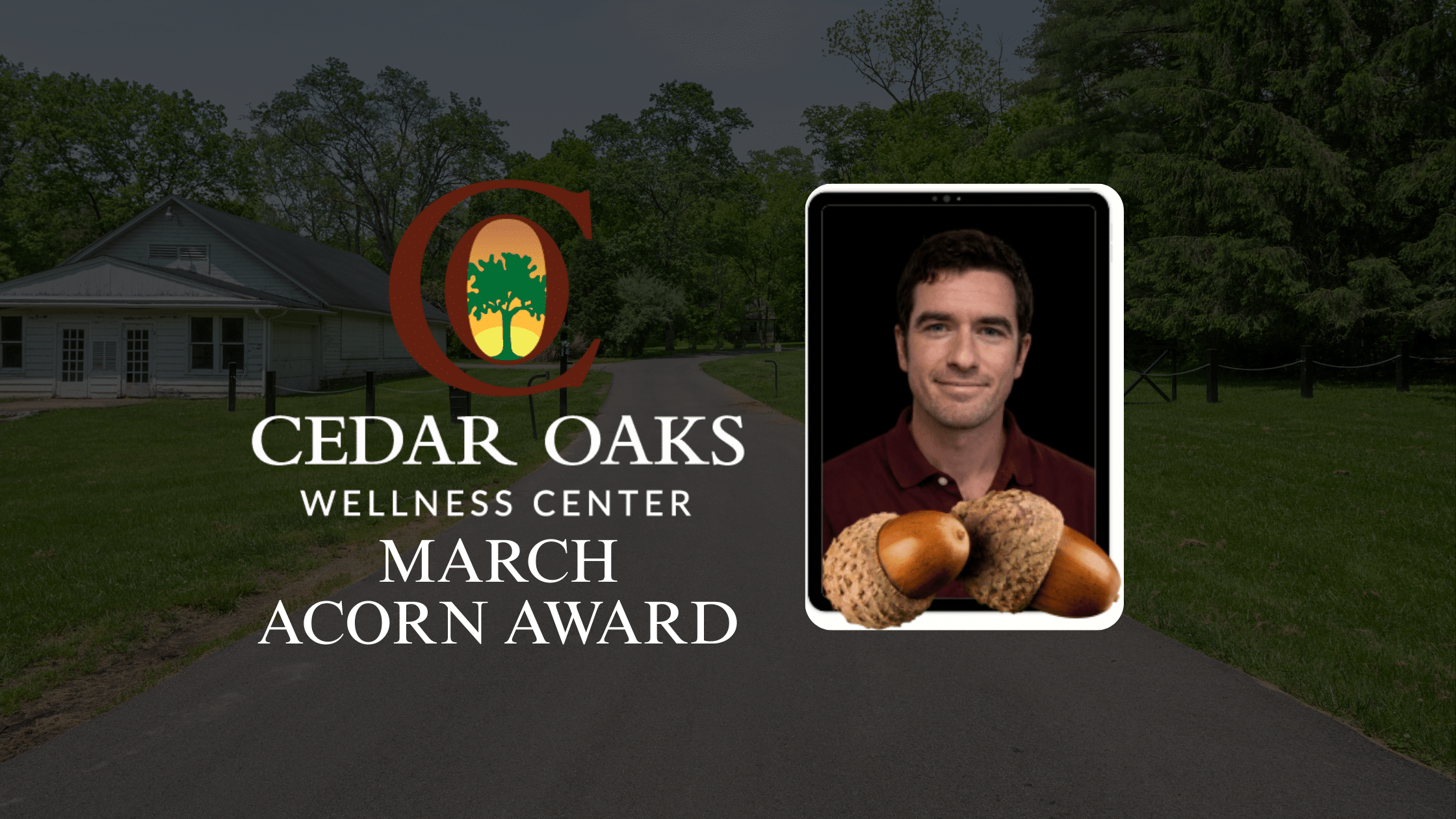
At Cedar Oaks Wellness Center, we are incredibly proud to present our March 2026 Acorn Award to Ryan Crossley-Bishop, a team member who truly embodies the process of transformation from a small seed of hope into a sturdy, resilient oak. We established this award to honor those who nurture growth every day, and Ryan’s consistent dedication to our mission and our clients makes him the perfect recipient for this month’s recognition.
This monthly honor is particularly special because the nominations come directly from both our clients and our staff. It highlights individuals who demonstrate reliability, everyday excellence, and a deep-seated professionalism. Ryan’s presence on our 120-acre campus has become a symbol of the stability and compassion we strive to provide for everyone entering our doors.
Ryan Crossley-Bishop has become a cornerstone of the Cedar Oaks community through his consistent positive attitude and genuine compassion. In the world of Ohio drug and alcohol rehab, situations can often become intense or overwhelming. Ryan’s ability to step into these challenging moments with a calm, solution-focused mindset has made him an invaluable asset to our team.
Whether he is listening to a client’s concerns or supporting a fellow staff member, Ryan leads with patience and confidence. He is known for his ability to de-escalate difficult situations with a professional grace that helps maintain the peace and safety of our campus. This “person-first” approach is exactly why Ryan stands out; he doesn’t just treat a problem, he cares for the individual.
Beyond his reliability as a team player, Ryan has made a profound clinical impact through his meditation sessions. These sessions have become a favorite among our clients, offering them a space to reconnect with their bodies and find mental clarity amidst the hard work of recovery.
In a setting as expansive as ours, Ryan’s talent for creating these meaningful connections helps our clients build the emotional regulation skills they need for long-term success. His willingness to step in and help wherever he is needed, always with a calm presence, is exactly what the Acorn Award is meant to celebrate.
Ryan Crossley-Bishop’s work is supported by the unique setting of Cedar Oaks Wellness Center. Our rehab facility is not a typical, clinical rehab center. We are located on 120 acres of a beautiful mix of forest and open space in the Cincinnati area.
This secluded, groundbreaking campus provides the perfect atmosphere for clients to “get away” from the noise of their old lives and focus entirely on the healing process. We believe that a secure, serene, and caring environment is the necessary soil for recovery to take root. By combining this peaceful setting with an unparalleled team of addiction specialists, we provide the personal attention and guidance required for sustained sobriety.
By receiving the March Acorn Award, Ryan Crossley-Bishop is now officially in the running for our highest staff recognition: the Cedar Roots Award.
At Cedar Oaks, we believe that growth happens in stages. While the Acorn Award highlights individuals like Ryan who demonstrate growth, reliability, and everyday excellence in their roles, the Cedar Roots Award is a distinction reserved for the end of the year. One monthly Acorn Award recipient is selected annually to receive this honor, which recognizes sustained impact, long-term leadership, and deep roots within the Cedar Oaks community.
Ryan’s dedication to our mission this month has planted a vital seed of excellence. We look forward to seeing how his influence, much like the “deep roots” of a mature oak, continues to support and strengthen our entire recovery forest throughout the year.
At Cedar Oaks Wellness, our goal is simple: helping others. We understand that every client has unique needs and experiences, which is why our approach to treatment is never “one-size-fits-all.” We offer both residential inpatient and detox programs tailored to the individual, empowering our clients to take an active role in their own journey.
We are incredibly grateful to have Ryan Crossley-Bishop as part of the Cedar Oaks family. His unique blend of a solutions-focused mindset and a deeply compassionate heart makes him a vital asset to our 120-acre healing sanctuary. Ryan is a shining example of what it looks like to “meet clients where they are,” whether he is de-escalating a difficult moment with steady, calm professionalism or guiding a group through a session of restorative meditation.
As our March Acorn Award winner, Ryan represents the vital spirit of growth and reliability that defines our community. His ability to anchor others during the storms of early recovery helps our clients build the “deep roots” they need for a lifetime of sobriety. We look forward to seeing him continue to grow and positively impact the lives of everyone who steps foot on our campus.
Are you or a loved one struggling with addiction? If you are looking for a place where you will be treated with compassion, dignity, and a truly personalized approach to wellness, Cedar Oaks Wellness is here for you. From our dedicated staff like Ryan to our secluded forest environment and comprehensive detox programs, we are ready to help you begin your journey to a healthy lifestyle. Contact us today.
Addiction treatment is not one-size-fits-all. The ASAM levels of care provide a framework for matching individuals with the right intensity of treatment based on their medical, emotional, and recovery needs. This guide explains each level of care offered in Ohio and helps families understand what option may be appropriate. You can also learn more about how to find a reputable rehab.
The American Society of Addiction Medicine (ASAM) developed nationally recognized criteria to guide placement decisions in addiction treatment.
These levels ensure individuals receive:
Detox is often the first step in treatment for individuals experiencing physical dependence.
Detox focuses on:
Detox should always be supervised by licensed medical professionals.
Residential treatment provides 24/7 care in a structured environment.
Best for individuals who:
Includes therapy, medical oversight, and daily recovery programming.
PHP offers intensive treatment during the day while allowing clients to return home or to supportive housing.
Often includes:
IOP provides flexibility while maintaining structured support.
Ideal for individuals who:
Outpatient care offers continued therapeutic support with minimal time commitment.
Often used for:
Clinical assessments consider:
Placement decisions should always be guided by licensed professionals.
Myth: Residential treatment is always best.
Fact: The right level depends on individual needs.
Myth: Outpatient treatment isn’t effective.
Fact: Outpatient care can be highly effective for the right candidates.
Cedar Oaks Wellness provides multiple levels of care, led by licensed professionals, allowing clients to transition smoothly as recovery progresses.
How long does each level of care last?
Length varies based on clinical needs and progress.
Can I move between levels of care?
Yes. Treatment plans evolve as recovery progresses.
Understanding your options is the first step toward recovery.
Verify your insurance or contact Cedar Oaks Wellness to learn which level of care is right for you.
When it comes to addiction treatment, the methods behind the care matter just as much as the compassion of the people delivering it. Evidence-based therapies are grounded in scientific research and have been proven to help individuals achieve and sustain recovery. This guide explains what evidence-based treatment means, which therapies work best, and how Cedar Oaks Wellness integrates these proven approaches into every level of care.
Ohio continues to lead the Midwest in behavioral health innovation, offering accredited programs that use therapies supported by data, not trends. Understanding what to look for ensures that you or your loved one receives care that’s both compassionate and clinically effective.
“Evidence-based” simply means that a treatment method has been tested, studied, and proven effective through scientific research and measurable outcomes. These therapies are not built on guesswork or personal opinion—they’re backed by decades of data and clinical success stories.
At its core, evidence-based care combines:
Effective treatment isn’t one-size-fits-all. The best programs tailor evidence-based therapies to meet each person’s unique needs, circumstances, and stage of recovery.
Ohio’s licensed treatment facilities use a combination of research-backed methods to address both the physical and psychological sides of addiction.
CBT is one of the most widely used and effective therapies for addiction. It helps individuals identify negative thinking patterns, manage triggers, and replace harmful behaviors with healthier coping skills.
How it works:
CBT has decades of clinical data supporting its success in reducing relapse rates and improving emotional resilience.
DBT combines traditional talk therapy with mindfulness and emotional regulation techniques. Originally developed to treat borderline personality disorder, it’s now used widely in addiction and dual-diagnosis treatment.
DBT focuses on:
This approach is especially helpful for individuals with co-occurring mental health conditions, such as anxiety, depression, or trauma-related disorders.
Motivational Interviewing is a client-centered technique that helps individuals explore their readiness for change. Instead of confrontation, it uses empathy and collaboration to empower self-motivation.
Key benefits include:
MI is often used early in recovery and during transitions between levels of care.
MAT combines counseling and behavioral therapy with FDA-approved medications to treat substance-use disorders safely and effectively. Under medical supervision, MAT helps manage cravings and withdrawal symptoms while supporting long-term recovery.
Common medications used include:
When combined with therapy and medical monitoring, MAT reduces the risk of relapse and improves patient retention in treatment programs.
Many individuals struggling with addiction have experienced trauma. Trauma-informed care recognizes these experiences and ensures treatment occurs in a safe, supportive, and nonjudgmental environment.
Core principles include:
By addressing trauma as part of the recovery process, clients can heal both emotionally and physically.
Addiction affects more than just the individual—it impacts the entire family system. Evidence-based family therapy helps rebuild trust, improve communication, and establish supportive recovery environments.
Family involvement:
Programs like Cedar Oaks Wellness encourage family engagement at every stage of the recovery process.
No single therapy works in isolation. The most successful treatment programs combine several evidence-based approaches based on each person’s needs, progress, and goals.
For example:
At Cedar Oaks Wellness, this integrated model ensures that every client receives well-rounded, personalized care supported by a team of licensed professionals.
Before choosing a rehab center, ask these questions:
✅ Are therapists licensed and trained in CBT, DBT, or other recognized modalities?
✅ Does the center use research-backed methods like MAT or trauma-informed care?
✅ Are treatment outcomes tracked and measured over time?
✅ Is there a medical director overseeing the use of therapy and medication?
✅ Are treatment plans individualized based on assessment and clinical need?
If the answer to these questions isn’t clear—or if a program relies on unverified “alternative” methods without licensed oversight—it may not provide evidence-based treatment.
| Myth | Fact |
| All therapy is evidence-based. | Only treatments proven effective through scientific research qualify as evidence-based. |
| Alternative programs work just as well. | Wellness activities can complement therapy but should never replace scientifically supported methods. |
| Medication-Assisted Treatment replaces therapy. | MAT is most effective when combined with counseling and behavioral therapy. |
| Evidence-based treatment feels impersonal. | These therapies are delivered with compassion and tailored to each person’s unique goals. |
At Cedar Oaks Wellness, recovery is grounded in research and guided by licensed experts. Our clinical and medical teams collaborate to integrate evidence-based therapies into every aspect of treatment — from detox and therapy to aftercare and relapse prevention.
Our commitment includes:
By combining science, compassion, and clinical integrity, Cedar Oaks helps clients rebuild their lives on a foundation of evidence-based success.
What makes a therapy evidence-based?
It’s backed by scientific research and clinical data showing measurable improvement in recovery outcomes.
Are evidence-based therapies available in Ohio?
Yes — accredited programs across the state, including Cedar Oaks Wellness, use therapies like CBT, DBT, and MAT under licensed supervision.
Can holistic treatments be part of evidence-based care?
Yes, as long as they complement proven therapies. Activities like mindfulness or exercise support recovery when used alongside core behavioral therapies.
How can I verify a program’s use of evidence-based methods?
Ask about specific modalities, clinician credentials, and how outcomes are tracked. Licensed programs will share this information transparently.
Why are evidence-based therapies important for long-term recovery?
They provide structure, accountability, and scientifically proven strategies that help individuals stay sober and emotionally stable over time.
Recovery is most effective when it’s guided by proven methods and compassionate experts. Cedar Oaks Wellness offers evidence-based addiction treatment designed to empower lasting change.
Verify your insurance or contact our admissions team today to learn more about our research-backed programs in Ohio and begin your journey toward recovery.
The people guiding your recovery are just as important as the program itself. Choosing a rehab center with qualified, licensed professionals ensures every aspect of care — from detox to therapy — is ethical, safe, and evidence-based. This guide explains key staff credentials in Ohio, the role of medical oversight, and how to identify trustworthy addiction-treatment teams.
Ohio is home to some of the most highly trained behavioral-health professionals in the Midwest. Understanding what their credentials mean helps families make confident, informed decisions when choosing addiction care close to home — whether you live near Cincinnati, Dayton, or Columbus.
Addiction recovery requires both medical and therapeutic expertise. Licensed professionals follow state and national standards designed to protect patient safety, uphold ethics, and ensure effective outcomes.
When a rehab center employs credentialed clinicians, patients receive coordinated, science-based treatment — not guesswork. At Cedar Oaks Wellness, every level of care involves licensed providers who combine compassion with clinical excellence to help each person heal safely and sustainably.
Understanding professional titles and abbreviations can be confusing. Here’s what to know about the most common credentials in Ohio addiction treatment.
Verification Tip: You can confirm Ohio licensure through the Ohio Counselor, Social Worker, and Marriage and Family Therapist Board and the Ohio Board of Nursing.
Detoxification and withdrawal are complex medical processes. Proper medical oversight can prevent complications and ensure comfort and safety throughout recovery.
Why it matters:
Programs lacking licensed medical staff risk unsafe detox practices and inconsistent clinical quality.
When researching Ohio rehab centers, consider these steps to verify credibility:
If a rehab center avoids questions about qualifications or uses vague titles, that’s a warning sign. Be cautious of:
Choosing a team with verifiable credentials helps ensure ethical, clinically sound care.
| Myth | Fact |
| All counselors have the same training. | Addiction counseling requires specialized licensure and clinical experience. General mental-health training isn’t enough for complex substance-use care. |
| Medical oversight isn’t necessary. | Detox and MAT must be supervised by licensed physicians or nurses for safety and effectiveness. |
| Credentials don’t affect outcomes. | Programs led by credentialed professionals consistently achieve higher success rates and patient satisfaction. |
| If a center looks clean, it must be qualified. | Appearance doesn’t equal compliance. Always verify staff credentials through official Ohio licensing boards. |
Accredited programs staffed with licensed professionals can implement therapies proven to work, including:
Unlicensed or underqualified staff often rely on unproven methods, putting patient progress at risk.
At Cedar Oaks Wellness, every level of care is guided by licensed medical and clinical professionals. Our multidisciplinary team collaborates daily to ensure treatment is safe, personalized, and grounded in research.
We combine:
Located in Oregonia, Ohio, our peaceful setting near Cincinnati offers the privacy and professional support needed for lasting recovery.
What qualifications should I look for in rehab staff?
Seek licensed counselors (LPC, LISW, LICDC), registered nurses, and board-certified physicians. These credentials confirm training and ethical accountability.
How can I verify credentials in Ohio?
Visit the Ohio Counselor, Social Worker, and Marriage and Family Therapist Board or the Ohio Board of Nursing to confirm licensure status and expiration dates.
Why is medical oversight so important in detox?
Medical supervision prevents complications and ensures detox is safe, comfortable, and clinically appropriate.
Can unlicensed staff work in rehab centers?
Yes — but only in support roles under the direction of licensed professionals. They cannot deliver therapy or medical treatment independently.
How does Cedar Oaks ensure quality care?
Cedar Oaks maintains state licensure and accreditation while employing credentialed professionals across all levels of care. Our team combines clinical expertise and compassion to support long-term recovery.
Recovery starts with trust — and trust begins with qualified care. At Cedar Oaks Wellness, you can be confident your treatment is guided by experienced clinicians dedicated to ethical, evidence-based healing.
Verify your insurance or contact our admissions team to learn how our credentialed team can help you begin your recovery journey.
Recognizing addiction behaviors in someone you love can feel like piecing together a puzzle while parts remain deliberately hidden. The nature of substance use creates powerful barriers that make acknowledgment difficult for everyone involved.
Addiction denial manifests in countless ways—your loved one might minimize their substance use, blame external circumstances, or genuinely believe they maintain control. Secrecy becomes second nature as they hide bottles, cover tracks, and construct elaborate explanations for their behavior. These protective mechanisms aren’t character flaws; they’re symptoms of a condition that rewires how the brain perceives reality and risk.
The substance use impact ripples outward, touching every aspect of life:
This is precisely why Addiction Intervention requires thoughtful preparation rather than spontaneous confrontation. Emotions run high when discussing substance use, and without structure, conversations can quickly spiral into arguments that push your loved one further away. A well-planned intervention creates a safe space where concern is expressed through love rather than judgment, where consequences are clear but compassion remains central.
However, it’s important to remember that withdrawal from substances often comes with its own set of challenges. One common issue is insomnia. If your loved one is struggling with sleep after quitting substances, there are effective strategies for managing insomnia during withdrawal that can help ease this transition.
Before approaching your loved one, it’s important to have a clear understanding of their addictive behaviors. This will help everyone involved communicate better and avoid making assumptions.
Key observations to document include:
The impact on family extends beyond the person struggling with addiction. Note how relationships have shifted—perhaps trust has eroded, communication has broken down, or household dynamics have become unpredictable. Record specific examples: missed birthdays, broken promises, or moments when their behavior caused harm to others.
When identifying substance use signs, approach this task with both honesty and compassion. Keep a private journal where you note dates, times, and circumstances without judgment. This documentation serves two purposes: it provides concrete examples during the intervention and helps you recognize patterns you might have previously dismissed or minimized.
It’s also crucial to be aware of codependency in addiction, as these behaviors can enable substance abuse and hinder recovery. Recognizing such patterns in your relationship can be the first step towards breaking free from them and supporting your loved one more effectively.
Building a strong intervention team requires thoughtful consideration of who will best support your loved one’s path to recovery. Select individuals who maintain genuine, positive relationships with the person struggling with addiction—those whose voices carry weight and whose presence demonstrates authentic care.
Your family support group should include members who can remain calm under pressure and communicate with compassion rather than judgment. Close friends involvement adds valuable perspective, particularly those who have witnessed the progression of the addiction firsthand.
To effectively plan an addiction intervention in Ohio, it’s essential to clearly define roles within your planning group:
Unity among team members creates the foundation for success. Each participant must commit to a shared purpose: helping your loved one accept treatment. Private pre-meetings help align everyone’s approach, ensuring consistent messaging rooted in love rather than blame. This aligns well with the insights from this research article which highlights the importance of a supportive environment during such interventions.
Before the intervention meeting takes place, your team needs concrete solutions ready. Researching treatment options Ohio provides ensures you can present immediate pathways to recovery rather than vague promises of “getting help someday.”
Start by exploring rehab programs Ohio facilities like Cedar Oaks Wellness Center offer, which include:
Match the treatment level to your loved one’s specific situation. Someone with severe physical dependence may need medical detox first, while another person might benefit from starting with outpatient therapy.
Equally important is preparing consequences refusal treatment brings. These aren’t punishments—they’re loving boundaries that protect everyone involved. Examples include no longer providing financial support, limiting contact until treatment begins, or asking them to find alternative housing. Write these down clearly so each team member can present them consistently with compassion during the intervention meeting.
Practice the intervention script to turn nervousness into confident and caring delivery. Each team member should set aside time to create and practice their personal message, highlighting specific incidents they’ve observed and showing genuine concern without blame or judgment.
Role-play different scenarios of the intervention to help the group prepare for difficult moments. During practice sessions, make sure to:
When emotions are running high, it’s crucial to communicate clearly. The planning team should practice speaking calmly, using “I” statements instead of blaming “you” language, and bringing discussions back to the treatment plan when they go off track. If tensions rise, designate one person to gently steer the meeting back on course. By rehearsing these supportive but firm communication techniques, you’ll build confidence and help everyone stay focused on the common goal: getting your loved one the help they desperately need.
The day of the intervention arrives, and your preparation transforms into action. Choose a private, comfortable setting where your loved one feels safe—perhaps a familiar living room or quiet space free from distractions. This environment helps reduce defensiveness and creates an atmosphere conducive to honest conversation.
As you begin, each team member shares their prepared statements, creating a united front intervention that demonstrates collective concern rather than isolated criticism. Speak from the heart, using “I” statements that express personal observations and feelings without blame. Your loved one needs to see that this gathering stems from love, not judgment.
Presenting the treatment plan becomes the pivotal moment. Have specific details ready—admission dates, program information from Cedar Oaks Wellness Center, and transportation arrangements. This immediate access to treatment resources eliminates barriers and shows you’ve thought through every detail. When encouraging acceptance, emphasize hope and possibility rather than ultimatums. Your loved one should understand that recovery is achievable and that professional support awaits them right now, not someday in the future.
In this crucial moment of presenting the treatment plan, it’s essential to have all necessary information at hand. This includes not just logistical details such as admission dates and transportation arrangements but also comprehensive treatment options available at facilities like Cedar Oaks Wellness Center. Having this information readily available can significantly ease your loved one’s apprehensions about seeking help.
The intervention meeting marks a beginning rather than an endpoint. Post-intervention counseling becomes essential for family members who may experience relief, guilt, anxiety, or exhaustion after the emotional intensity of the intervention. Professional therapists help families process these complex feelings while learning healthy communication patterns that support lasting change.
Daily routines require thoughtful adjustment to create an environment conducive to healing. This might include:
Ongoing recovery support extends beyond the individual struggling with addiction. When mental health conditions co-exist with substance use, arranging dual diagnosis treatment becomes critical. Cedar Oaks Wellness Center specializes in addressing both conditions simultaneously through integrated care plans, which is a key feature of their addiction recovery programs in Ohio that support mental health. Therapy after intervention may include individual sessions, family counseling, and group support—each component strengthening the foundation for sustainable recovery.
Some situations require the expertise of a professional interventionist in Ohio, especially when dealing with complex addiction cases that involve additional risk factors. If your loved one has a documented history of violence, suicidal thoughts, or severe co-occurring mental health issues, it is crucial to involve trained specialists for the safety of everyone and the success of the intervention.
Professional intervention services create a structured, mediated environment where emotions can be expressed without escalating into conflict. Specialists understand how to navigate resistance, manage crisis situations, and adjust their approach when unexpected reactions occur. They bring objectivity that family members—understandably overwhelmed by their own emotions—may struggle to maintain.
At Cedar Oaks Wellness Center, professional interventionists guide families through every phase:
This comprehensive support proves invaluable when dual diagnosis treatment is necessary, ensuring that both substance use and underlying mental health conditions receive simultaneous attention from the very first conversation.
For those considering an intervention, Cedar Oaks Wellness Center offers drug and alcohol intervention services that are compassionate and effective. These services are especially crucial for individuals dealing with substance use disorders along with PTSD, where building coping skills for triggers becomes an essential part of recovery.
Addiction rarely improves on its own—it typically gets worse, creating increasingly dangerous situations for everyone involved. Early intervention benefits extend far beyond immediate safety; they can preserve relationships, protect careers, and save lives before irreversible damage occurs.
Watch for these urgent warning signs that demand immediate action:
Preventing severe consequences becomes exponentially harder as addiction progresses. What begins as occasional misuse can rapidly spiral into medical emergencies, criminal charges, or fatal overdoses. When you’re learning how to plan an addiction intervention in Ohio, time matters deeply. Each day of delay allows the addiction to strengthen its grip.
A last chance intervention may feel frightening, yet it represents genuine hope. Structured professional help through facilities like Cedar Oaks Wellness Center offers proven pathways from crisis to recovery, transforming what feels like an ending into a powerful new beginning.
Cedar Oaks Wellness Center Ohio is dedicated to supporting your family throughout the entire recovery process. Our approach to addiction treatment is holistic, meaning we go beyond just focusing on the addiction itself. Instead, we take into account the whole person—their strengths, struggles, and unique healing path.
Located on a peaceful 120-acre campus near Cincinnati, we offer a wide range of programs designed to meet individual needs. From detoxification to intensive outpatient care, each program is tailored to suit specific circumstances.
Planning an addiction intervention in Ohio can be overwhelming, but you don’t have to navigate this difficult task on your own. Our experienced team is here to help. We have extensive knowledge in guiding families through interventions and creating personalized recovery plans that address both substance use issues and underlying mental health conditions.
As part of our commitment to your loved one’s recovery journey, we also provide valuable resources that can assist in preventing relapse. Understanding the most common reasons why individuals may relapse and implementing effective relapse prevention techniques are essential components for achieving lasting success in recovery.
Take the first step today. Contact Cedar Oaks Wellness Center at (513) 780-5333 to speak with our compassionate professionals who can assist you in developing an intervention strategy and preparing a treatment plan tailored specifically for your loved one. Remember, hope begins with action.
When you or someone you love is facing the challenges of addiction, the path forward can feel overwhelming. Medication-Assisted Treatment (MAT) represents a compassionate, evidence-based approach that combines FDA-approved medications with counseling support services to address both opioid addiction treatment and alcohol dependence treatment. This integrated method recognizes that addiction is a medical condition requiring comprehensive care—not a moral failing.
At its core, MAT works by addressing the physical aspects of addiction while you simultaneously engage in the emotional and behavioral work of recovery. The medications help stabilize your brain chemistry, allowing you to focus on healing without the constant distraction of cravings or the fear of painful withdrawal symptoms. Think of it as creating a stable foundation upon which you can build your new life.
The medications used in MAT are carefully selected based on your specific needs and the substance you’ve been struggling with. Each medication serves a unique purpose in supporting your recovery journey.
Methadone has been helping people reclaim their lives from opioid addiction for decades. This medication works by occupying the same receptors in your brain that opioids affect, but in a controlled, therapeutic way. It prevents the severe withdrawal symptoms that often derail early recovery attempts and significantly reduces cravings. When taken as prescribed under medical supervision, methadone allows you to function normally—going to work, caring for your family, and rebuilding your life without the constant pull of addiction.
Buprenorphine offers another path to stability. This medication partially activates opioid receptors, providing enough relief from withdrawal and cravings without producing the intense euphoria associated with opioid misuse. When combined with naloxone to reduce misuse risk, buprenorphine becomes an even safer option. This combination medication discourages misuse because naloxone blocks the effects if someone attempts to inject it improperly, while remaining inactive when taken as directed.
Naltrexone’s mechanism to block opioid receptors takes a different approach entirely. Available in both oral and injection forms, naltrexone prevents opioids from producing their typical effects. The injectable form provides month-long protection, removing the daily decision-making that can sometimes feel burdensome during early recovery. This medication works best after you’ve completed detoxification, creating a protective barrier against relapse.
While opioid addiction treatment relies on medications like methadone and buprenorphine, alcohol dependence treatment utilizes its own set of FDA-approved medications that work through different mechanisms. These medications form a critical part of the integrated approach that combines pharmaceutical support with counseling support services to address both the physical and behavioral aspects of addiction.
Acamprosate helps restore the brain’s chemical balance that alcohol disrupts over time. This medication reduces cravings and the psychological discomfort many people experience during early recovery from alcohol use disorder (AUD). It works best when you’ve already stopped drinking and are committed to maintaining sobriety.
Disulfiram takes a different approach by creating unpleasant physical reactions when alcohol enters your system. These reactions—which can include nausea, flushing, and rapid heartbeat—serve as a powerful deterrent to drinking. This medication requires careful medical supervision and works most effectively when you’re motivated to avoid alcohol entirely.
Like naltrexone, which blocks opioid receptors and comes in both oral and injection forms, these alcohol dependence medications represent evidence-based tools that support your journey toward lasting recovery.
Opioid treatment programs Ohio operate under strict state and federal regulations to ensure safe, effective care. These certified facilities provide comprehensive support that extends far beyond simply dispensing medication. Each program must meet rigorous standards set by the Ohio Department of Mental Health and Addiction Services and the Substance Abuse and Mental Health Services Administration (SAMHSA).
The foundation of these programs rests on three essential pillars:
What sets quality opioid treatment programs Ohio apart is their commitment to individualized care. Your treatment plan reflects your unique circumstances, including your substance use history, mental health needs, family situation, and personal recovery goals. Clinicians regularly review and adjust your plan as you progress, ensuring the approach remains aligned with your evolving needs. This personalized attention recognizes that your path to recovery is distinctly yours, requiring flexibility and compassionate understanding at every step.
The research surrounding Medication-Assisted Treatment speaks volumes about its life-saving potential. Studies consistently demonstrate that individuals engaged in MAT programs experience significantly lower rates of fatal overdoses compared to those attempting recovery without medication support. This overdose reduction becomes particularly meaningful when we consider the families who get to keep their loved ones and the communities that retain valuable members.
Relapse prevention stands as one of MAT’s most powerful advantages. The medications work by stabilizing brain chemistry, which means people in recovery can focus on rebuilding their lives rather than battling constant cravings and withdrawal symptoms. This stability creates a foundation strong enough to support lasting change.
The ripple effects of MAT extend far beyond physical health:
Perhaps most encouraging is the social functioning improvement that emerges as treatment progresses. People reconnect with family members, rebuild trust in relationships, and rediscover their ability to participate meaningfully in their communities. Parents return to their children, friends become reliable again, and individuals remember who they were before addiction took hold.
Incorporating physical activity into the recovery process can further enhance these benefits. Exercise has been shown to combat addiction by improving mood, reducing stress, and providing a healthy outlet for coping with cravings.
Moreover, it’s essential to recognize the role of complementary therapies alongside MAT. These therapies can address various aspects of addiction recovery, providing holistic support that enhances overall treatment effectiveness.
Treatment retention rates tell an important story about MAT’s effectiveness. When people stay engaged in their recovery programs longer, they develop stronger coping skills, build supportive networks, and establish healthier patterns that carry them through difficult moments. This sustained engagement transforms recovery from a temporary effort into a lasting lifestyle change.
Medication-Assisted Treatment (MAT) in Ohio: A Guide recognizes that recovery looks different for everyone. Treatment duration depends entirely on your unique circumstances, health history, and personal goals. Some individuals benefit from short-term therapy lasting several months, while others thrive with long-term maintenance therapy that extends for years or even indefinitely.
Personalized treatment duration serves as one of MAT’s greatest strengths. Your body, mind, and life situation determine how long you’ll need medication support. Many people discover that extended maintenance provides:
Programs adapt alongside your progress. As you grow stronger in recovery, your treatment team adjusts medication dosages, counseling frequency, and support services. This responsive approach means you’re never locked into a rigid timeline—your treatment evolves as you do, ensuring the support matches your current needs rather than following a predetermined schedule.
The financial aspect of treatment shouldn’t stand between you and recovery. Medicaid coverage in Ohio includes comprehensive MAT services, ensuring that individuals from various economic backgrounds can access life-saving treatment. Many private insurance plans also recognize MAT as an essential healthcare service, covering medication costs, counseling sessions, and ongoing medical monitoring.
Accessibility to MAT programs through insurance support creates ripple effects throughout communities. When people can afford treatment without facing financial devastation, they’re more likely to seek help early, stay engaged in their recovery journey, and rebuild their lives with dignity. The burden of choosing between basic necessities and addiction care dissolves when insurance for addiction treatment removes these barriers.
Cedar Oaks Wellness Center works directly with insurance providers like BCBS to verify coverage and help families understand their benefits. Their BCBS drug and alcohol rehab in Ohio treats clients with a wide range of substance use disorders, including cocaine and Xanax addictions. This commitment to financial transparency means you can focus on healing rather than worrying about unexpected costs. The center’s staff assists with navigating insurance questions, making the path to recovery as smooth as possible from your very first call.
Moreover, Cedar Oaks provides specialized cocaine addiction treatment services and Xanax addiction treatment services near Oregonia, Ohio. They are dedicated to ensuring quality care in every aspect of the recovery process. For those seeking guidance on navigating addiction treatment in Ohio, Cedar Oaks offers valuable resources and support to find trusted centers with certified staff while avoiding unscrupulous providers.
Holistic addiction treatment Ohio programs recognize that recovery extends far beyond simply addressing substance use. At Cedar Oaks Wellness Center, the philosophy centers on treating the whole person—mind, body, and spirit—through individualized recovery plans that honor each person’s unique journey.
The center’s approach seamlessly weaves Medication-Assisted Treatment into a broader tapestry of healing modalities. While MAT addresses the physical aspects of addiction, comprehensive rehab programs incorporate therapeutic activities that nurture emotional and spiritual wellness:
In particular, coping strategies for anxiety in addiction recovery are integrated into the therapeutic process, providing individuals with essential tools to manage anxiety during their recovery journey.
Set on a peaceful 120-acre campus near Cincinnati, Cedar Oaks creates an environment where healing feels natural and supported. The experienced team approaches each person with genuine compassion, understanding that vulnerability often accompanies the first steps toward recovery.
This commitment to respectful, personalized care builds the trust necessary for meaningful engagement. When you feel truly seen and valued—not defined by your addiction—the path to sustained recovery becomes clearer. Cedar Oaks stands beside you, offering lifetime aftercare support through their alumni program, ensuring you’re never alone on your journey.
For those struggling with prescription drug abuse, Cedar Oaks also offers specialized outpatient treatment programs tailored to address this growing problem in the Midwest. If you’re ready to take the first step towards recovery or need more information about our programs, feel free to contact us.
Finding trustworthy addiction treatment can feel overwhelming — especially when every center claims to offer the best care. Knowing how to verify a facility’s credentials helps families make confident, informed decisions about where to begin recovery. Licensing and accreditation are the cornerstones of trustworthy addiction treatment. They ensure that rehab centers operate legally, ethically, and according to the highest standards of care. This guide explains the difference between state licensing and national accreditation, what to look for when evaluating Ohio programs, and how to verify credentials through CARF International, The Joint Commission, and state agencies.
Ohio has one of the most comprehensive oversight systems in the U.S. for behavioral health programs, which helps families find safe and effective addiction treatment close to home. Whether you live near Cincinnati, Dayton, or Columbus, understanding how Ohio regulates and accredits rehab centers can help you make a confident, informed decision about where to seek care.
When searching for a rehab center in Ohio, the credentials behind a program can make or break your decision. Licensing and accreditation protect patients and families from unqualified or unsafe providers. They also ensure that the care delivered aligns with best practices for addiction recovery and mental health treatment.
Licensed and accredited rehab centers in Ohio undergo regular audits, staff training verification, and clinical outcome reviews, giving you confidence that your loved one is receiving ethical, evidence-based care.
Licensing is the minimum requirement for operating an addiction treatment center in Ohio. It confirms that the facility has met state-mandated standards for health, safety, and care.
In Ohio, addiction treatment providers are licensed and monitored by the Ohio Department of Mental Health and Addiction Services (OhioMHAS).
A licensed rehab center must demonstrate:
Before enrolling in a program, you can confirm an active license directly through the OhioMHAS provider directory.
Tip: Ask for the facility’s license number and the specific levels of care it’s approved to offer (e.g., detox, residential, partial hospitalization, or outpatient).
While state licensing proves legality, national accreditation signals excellence. Accredited centers meet rigorous standards set by independent, third-party organizations that evaluate everything from patient safety to therapy outcomes.
CARF Ohio-accredited programs have demonstrated measurable results in client care, safety, and program effectiveness. Accreditation is renewed regularly and includes on-site reviews.
CARF evaluates:
You can verify accreditation by searching the facility’s name at CARF.org.
The Joint Commission (formerly JCAHO) is one of the most respected healthcare accrediting bodies in the nation. Its Behavioral Health Care and Human Services Accreditation ensures compliance with best practices in clinical and medical treatment.
Centers accredited by The Joint Commission must demonstrate:
To confirm a facility’s accreditation, visit the Quality Check directory and search the organization’s name.
Accreditation covers care quality — certification often covers business ethics. LegitScript Certification, for instance, verifies that addiction treatment centers comply with laws, transparency standards, and ethical marketing practices.
This certification is recognized by Google and Meta, allowing certified centers to advertise addiction treatment services online. A LegitScript-certified facility demonstrates compliance, legitimacy, and a commitment to patient protection in digital spaces.
Accredited and licensed centers are required to:
If a facility lacks verifiable accreditation or refuses to disclose credentials, it’s a sign to continue your search elsewhere.
Choosing a non-accredited facility can carry serious risks. Without proper oversight, programs may use unproven therapies, lack qualified medical supervision, or fail to follow safety protocols. Patients in these environments face a higher chance of relapse, inadequate care, or even unethical practices. Accreditation protects you from these risks by holding programs accountable to national standards.
Use this simple step-by-step checklist to confirm whether an Ohio rehab center meets high standards:
Myth 1: All licensed centers are the same.
Fact: Licensing only confirms legality, not quality. Accreditation ensures adherence to advanced standards and continuous improvement.
Myth 2: Accreditation is optional and doesn’t impact care.
Fact: Accredited programs have proven track records for safety, ethical conduct, and treatment effectiveness.
Myth 3: Verifying accreditation is complicated.
Fact: It takes just minutes to check directories like CARF or The Joint Commission — and it can prevent months of stress or risk.
At Cedar Oaks Wellness, we combine state licensure, Joint Commission standards, and LegitScript certification to deliver trusted, ethical care. Our programs are staffed by licensed clinicians and medical professionals who ensure every client receives individualized, evidence-based treatment.
From detox through aftercare, our mission is to make recovery accessible, transparent, and safe for every Ohio resident seeking hope and healing.
What’s the difference between licensing and accreditation?
Licensing is required by the state to legally operate a treatment center. Accreditation is voluntary but demonstrates excellence — confirming the program meets national standards for safety, ethics, and quality of care.
Are all licensed rehabs in Ohio accredited?
No. Licensing is mandatory, but accreditation is not. Only facilities that pursue CARF or Joint Commission accreditation go above and beyond basic compliance.
What is CARF accreditation?
CARF International is a nonprofit organization that evaluates rehabilitation and behavioral health programs worldwide. A CARF-accredited Ohio rehab demonstrates strong clinical outcomes, ethical business practices, and high client satisfaction.
Why does The Joint Commission matter for addiction treatment?
The Joint Commission ensures that medical and behavioral health services follow nationally recognized safety and quality standards. Accreditation from this body signals that a facility provides clinically sound, patient-centered care.
How do I verify if a rehab center is legitimate?
Check licensing via OhioMHAS, accreditation via CARF or The Joint Commission, and ethical compliance through LegitScript. A reputable program will share documentation and answer your questions transparently.
Choosing a licensed and accredited rehab center is one of the most important decisions you’ll make on your recovery journey. Cedar Oaks Wellness proudly meets and exceeds these standards to ensure safe, ethical, and effective treatment.
Verify your insurance or contact our admissions team today to learn more about our accredited programs and how we can help you or your loved one start the path toward recovery.
A Partial Hospitalization Program (PHP) serves as a bridge between the intensive structure of inpatient hospitalization and the flexibility of standard outpatient treatment. This intermediate level of care offers comprehensive therapeutic support for individuals who need more than weekly counseling sessions but don’t require 24-hour medical supervision. PHP creates a safe space where you can receive substantial clinical attention while beginning to rebuild your daily life outside a residential setting.
The typical Partial Hospitalization Program structure involves attending treatment 5 to 7 days per week for more than 5 hours each day. This consistent schedule provides the stability and intensity needed for meaningful progress while allowing you to return home each evening. You’ll experience the benefits of immersive treatment without stepping away from your life completely.
Components of a comprehensive Partial Hospitalization Program include:
This multifaceted approach addresses not just the symptoms you’re experiencing, but the underlying patterns and needs that contribute to your mental health or substance use challenges. PHP recognizes that healing happens through varied pathways, meeting you where you are in your recovery journey.
PHP serves individuals who need more support than traditional outpatient therapy can provide, yet don’t require 24-hour medical supervision. The admission criteria PHP programs use typically assess symptom severity, safety concerns, and the ability to function outside a hospital setting.
Ideal candidates for Partial Hospitalization Program include:
PHP also serves as a bridge for those who’ve tried standard outpatient treatment but found it insufficient for their needs. Perhaps you’ve attended weekly therapy sessions but realized you need more frequent support and structure. PHP offers that middle ground—intensive enough to create meaningful change, flexible enough to maintain your connections to home, work, and family.
The benefits of Partial Hospitalization Program extend far beyond clinical treatment hours. This level of care delivers structured, intensive support comparable to inpatient programs—typically 5-7 days per week for more than 5 hours daily—while preserving your connection to the life you’re working to rebuild. You return home each evening, sleep in your own bed, and maintain the routines that ground you.
Flexible treatment options within Partial Hospitalization Program allow you to keep important parts of your life intact during recovery. Many people continue working part-time, caring for family members, or attending to responsibilities that would be impossible during residential treatment. This balance isn’t just convenient—it’s therapeutic. Practicing new coping skills in real-world settings while still having daily professional support creates a powerful learning environment.
Your relationships don’t have to pause while you heal. Family dinners, school pickups, and meaningful conversations continue. These connections often serve as motivation and remind you why recovery matters. PHP recognizes that healing happens not in isolation, but within the context of the life you’re reclaiming.
At Cedar Oaks Wellness Center, our Partial Hospitalization Program (PHP) integrates evidence-based therapies within a holistic addiction treatment framework that addresses your whole person—mind, body, and spirit.
Cognitive Behavioral Therapy (CBT) forms a cornerstone of our approach, helping you identify and reshape negative thought patterns that fuel addictive behaviors. Through CBT sessions, you’ll develop practical coping strategies and problem-solving skills that translate directly into your daily life outside of treatment hours.
Dialectical Behavioral Therapy (DBT) complements this work by teaching four essential skill sets:
Our experienced therapists weave these modalities together with other specialized approaches like Motivational Interviewing, creating an individualized treatment plan that respects your unique journey. Each therapy session builds upon the last, creating momentum toward lasting recovery while you maintain connections to your home environment.
For those considering our services, we offer various addiction treatment programs designed to cater to individual needs. If you’re unsure whether you require rehab or a psych hospital, our resources can help clarify which option would best suit your circumstances.
Additionally, we work with Med Mutual for drug and alcohol rehab in Ohio, which treats a wide range of substance use disorders. For more information about our programs or to discuss specific needs, please feel free to contact us.
Quality mental health and addiction treatment depends on rigorous oversight and adherence to state licensing requirements for PHP programs. Each state has its own set of rules to protect individuals seeking care and ensure treatment facilities meet essential standards.
Here are some examples of state requirements:
These regulatory bodies evaluate:
At Cedar Oaks Wellness Center, we maintain full compliance with Ohio’s licensing requirements while exceeding baseline standards through our commitment to continuous quality improvement and client-centered care. We believe that adhering to these strict licensing and certification requirements is crucial for providing effective treatment, as highlighted in this study on PHP program regulations.
Understanding insurance coverage for PHP services helps remove financial uncertainty during an already challenging time. Most major insurance providers recognize Partial Hospitalization Programs as a medically necessary level of care for appropriate candidates.
The authorization process typically begins with your treatment team submitting clinical documentation to your insurance company. This paperwork demonstrates why PHP represents the most appropriate level of care based on your specific symptoms, treatment history, and current needs. Your insurance provider reviews this information to determine:
Prior authorization requirements vary by insurance carrier and plan type. Some insurers provide approval within 24-48 hours, while others may take several business days. Many facilities, including Cedar Oaks Wellness Center, have dedicated insurance verification specialists who handle these communications directly, allowing you to focus on preparing for treatment rather than navigating complex insurance language.
Your financial responsibility might include deductibles, copayments, or coinsurance amounts specified in your policy. It’s essential to understand these aspects thoroughly, as they can significantly impact the affordability of your treatment. For more detailed insights into how insurance can make drug rehab more affordable in Ohio, you may want to explore this resource from Cedar Oaks which provides comprehensive information about making care affordable.
Moreover, you could benefit from utilizing tools and resources such as the Transparency tool offered by Florida Blue, which can provide additional clarity on your insurance coverage and associated costs.
Evaluating treatment needs requires honest reflection about where you are in your recovery journey. A Partial Hospitalization Program (PHP) depends on several personal factors that only you and your treatment team can fully assess.
Consider PHP if you’re experiencing:
Your lifestyle demands also play a role. PHP works well for individuals who need to maintain certain responsibilities—perhaps caring for family members during evenings or keeping a flexible work schedule—while still receiving comprehensive therapeutic intervention. The structure allows you to practice new coping skills in real-world settings between sessions, reinforcing what you learn during treatment hours.
If you’re unsure about your needs, reaching out for a professional assessment can clarify which level of care will best support your path to wellness.
Cedar Oaks Wellness Center Ohio is different from other treatment centers because we genuinely care about your recovery journey. Our approach is holistic, meaning we focus on healing the entire person rather than just treating the symptoms. When you choose our Partial Hospitalization Program (PHP), you’re choosing a team that understands and values your unique story and needs.
Our experienced staff works closely with you to develop individualized care plans that honor your preferences, challenges, and goals. We understand that cookie-cutter treatment doesn’t work because no two people experience addiction or mental health struggles the same way. This understanding drives our commitment to provide addiction recovery programs in Ohio that support mental health through integrated care, therapy, and community resources.
Located on a peaceful 120-acre campus near Cincinnati, our state-of-the-art facilities provide a serene backdrop for healing. The natural surroundings create space for reflection and growth while remaining accessible to families and support systems.
Recovery doesn’t end when programming does. Through our Cedar Oaks Cares alumni app, you’ll have lifetime access to aftercare support, connecting you with resources and community long after you complete PHP.
We offer same-day admission to detox, providing immediate access to professional care at Cedar Oaks Wellness in Ohio. This ensures that you can start your recovery journey without unnecessary delays.
At Cedar Oaks, you’ll feel respected, supported, and trusted every step of the way. Whether you’re considering our outpatient addiction treatment program in Ohio or exploring the difference between psych hospitals and residential treatment centers, we’re here to guide you through every step of your recovery process.