- Home
- Who We Are
- Treatment Programs
- What We Treat
- Resources
- Get Started

 By Kee Group
The journey toward recovery and mental wellness is often described as an uphill climb. It requires immense physical strength, emotional vulnerability, and the willingness to confront the darkest parts of one’s past. While clinical interventions like individual therapy and medical detox are the bedrock of this process, there is another essential component often overlooked: the ability to find stillness.
At Cedar Oaks Wellness Center in Ohio, we recognize that a brain in recovery is often a brain in “survival mode.” It is loud, it is anxious, and it is frequently hyper-vigilant. To truly heal, we must provide the mind with a way to downshift. This is where Guided Meditation becomes an invaluable clinical ally. In this comprehensive guide, we will explore how mindfulness-based practices serve as a cornerstone of integrative wellness and why Ohio residents are increasingly turning to these holistic tools to reclaim their lives.

For many beginners, the word “meditation” conjures up images of sitting in perfect silence for hours, struggling to “empty the mind.” This misconception often prevents people from ever trying the practice. Guided Meditation is fundamentally different. It is a structured, supportive experience where a trained facilitator—at Cedar Oaks, this is our expert Clinical Team, uses verbal cues to lead you through the process.
In a guided session, you aren’t left alone with your thoughts. Instead, you are given a “mental map” to follow. The facilitator might use:
By using these verbal anchors, guided meditation makes the benefits of mindfulness accessible to everyone, regardless of their previous experience or current mental state.
To understand why we prioritize meditation at our Ohio facility, we have to look at the neurobiology of the “addicted brain.” Chronic substance use and high-level stress damage the communication between the Prefrontal Cortex (the part of the brain responsible for logical thinking) and the Amygdala (the part responsible for the “fight or flight” response).
When a person enters recovery, their Amygdala is often stuck in the “ON” position. They feel a constant sense of dread, irritability, and restlessness. Guided meditation acts as a physiological “override.” By focusing on the present moment, the practice stimulates the Vagus Nerve, which signals the nervous system to shift from the Sympathetic (stress) branch to the Parasympathetic (relaxation) branch.
Through consistent practice, meditation helps “shrink” the Amygdala’s reactivity and “strengthen” the Prefrontal Cortex. This means that when a craving or a stressful trigger occurs, a person in recovery has the “mental space” to choose a healthy response rather than reacting impulsively.
While the immediate goal of meditation is often relaxation, the long-term clinical benefits are much more profound. At Cedar Oaks Wellness, we track how these integrative therapies impact our clients’ overall progress.
We live in an age of “over-information.” For someone struggling with mental health, this can manifest as racing thoughts or “brain fog.” Guided meditation provides a container for this energy, helping to quiet the noise and reduce the frequency of panic attacks or intrusive thoughts.
Recovery involves feeling emotions that were previously numbed by substances. This can be overwhelming. Meditation teaches “equanimity”—the ability to witness an emotion (like anger or sadness) without being immediately swept away by it.
Stress is the number one trigger for relapse. By practicing grounding techniques in a guided setting, clients build a “toolbox” they can use when they leave treatment. They learn that they have the power to regulate their own nervous system.
At Cedar Oaks Wellness Center, we utilize an Integrative Wellness model. This means we combine traditional evidence-based medicine with holistic practices. But why?
Healing from trauma and addiction is not just a cognitive process; it is a somatic (body-based) one. Trauma is often “stored” in the body in the form of chronic tension, digestive issues, and a high startle response. Integrative therapies support healing by:
This is a common question among our clients and their families. No, integrative wellness therapies like guided meditation are not a replacement for clinical therapy.
They do not take the place of:
Instead, think of meditation as a supportive service. It is a tool that complements evidence-based treatment. While clinical therapy helps you understand your trauma and behaviors, meditation helps you regulate the physical sensations that those traumas produce. They work in tandem to create a comprehensive healing environment.

Our guided meditation sessions and other integrative wellness offerings are specifically designed for individuals participating in our Residential Treatment Program in Ohio.
Because our residential program provides a 24/7 structured environment, we are able to weave these practices into the daily schedule. This allows clients to build a consistent habit, which is key to seeing the long-term neurological benefits of mindfulness. We believe that by immersing our clients in a culture of wellness, we give them the best possible chance at a “brighter” future.
A major barrier for many people is the feeling that they “aren’t good at it.” We want to clear that up right now: You cannot fail at meditation.
At Cedar Oaks, our sessions are:
Our goal is to demystify the practice so that when you leave our facility, you feel confident using these tools in your home, at your job, or in the middle of a busy Ohio grocery store.
At Cedar Oaks Wellness, we respect the autonomy of our clients. Participation in guided meditation is optional. It is offered as an additional layer of support within the treatment program.
However, we find that the vast majority of our clients choose to participate once they experience the “reset” that a 20-minute session can provide. In a day filled with intense self-reflection and hard work, meditation often becomes the “safe harbor” that our clients look forward to most.
If you were to walk into a session at our Ohio center, you would find a peaceful, quiet environment. The session usually follows a specific flow:
The ultimate goal of our integrative wellness program is to provide you with a sustainable lifestyle. While Ohio offers many beautiful meditation centers and parks (like the Hocking Hills or Cuyahoga Valley) that are perfect for practice, you can meditate anywhere.
Tips for post-treatment success:
Addiction and mental health struggles thrive in chaos. They rely on a mind that is constantly looking backward at past mistakes or forward at future fears. Guided meditation is the antidote to that chaos. By learning to anchor yourself in the “now,” you take back the power that the disorder tried to steal.
At Cedar Oaks Wellness Center, we are proud to lead the way in providing comprehensive, holistic, and evidence-based care in Ohio. We aren’t just treating a diagnosis; we are helping you rebuild a life that feels safe and worth living.
Disclaimer: The information provided in this blog is for educational and informational purposes only and is not a substitute for professional medical advice, diagnosis, or treatment. Reading this content does not establish a therapist-client relationship with Cedar Oaks Wellness Center or any of its clinicians. Recovery is a deeply personal and often non-linear process; if you find that the strategies mentioned here are not enough to stabilize your symptoms, or if your flashbacks or cravings are becoming increasingly unmanageable, please seek the support of a licensed mental health professional. If you are experiencing a mental health emergency or are in immediate danger to yourself or others, please contact the National Suicide and Crisis Lifeline, contact emergency services, or go to your nearest emergency room. Additionally, residents in Ohio can contact local crisis response teams for localized support.
 By Kee Group
At Cedar Oaks Wellness Center, we have always operated under the guiding principle that mental health is not just “in your head”, it is a profound physiological experience that can be significantly enhanced through IV therapy. The brain, while responsible for our thoughts and emotions, is an organ that requires a specific, high-quality fuel set to function at its peak. When we navigate the heavy lifting of recovery, manage chronic stress, or deal with mental health challenges, our bodies often deplete vital nutrients much faster than we can replenish them through diet alone.
Starting today, March 5, 2026, we are thrilled to expand our holistic toolkit with the official launch of the Brain Boost IV. Specifically formulated with our Mental Health Day Treatment clients in mind, this advanced IV therapy is designed to bridge the functional gap between physical biology and emotional stability.
We believe so strongly in the impact of integrated, holistic care that we want as many of our clients as possible to feel the difference for themselves. To celebrate the launch of this new service, we are offering an Introductory Special of $99 per treatment.
This is an invitation to invest in your cognitive health and give your mind the “reset” it deserves. Recovery is about more than just surviving; it is about thriving.

Our clinical team meticulously selected a specific blend of ingredients known for their profound impact on the “brain-body connection.” The Brain Boost IV isn’t just about general health; it’s about targeting the specific pathways that regulate mood, focus, and stress.
B vitamins are the essential building blocks of a healthy brain. They play a critical role in cellular energy production and the synthesis of neurotransmitters—the chemicals that allow brain cells to communicate. By providing a full spectrum of B vitamins, we help nourish the brain’s ability to maintain focus and promote a steadier, more resilient sense of well-being throughout the day.
In the world of wellness, magnesium is frequently referred to as “nature’s relaxant.” It is vital for nervous-system balance and plays a key role in deactivating the “fight or flight” response. For clients experiencing high anxiety or physical restlessness, magnesium helps support muscle release and deep relaxation, encouraging a more centered emotional state that makes therapeutic work more accessible.
B12 is a powerhouse nutrient for cognitive function and natural energy production. It is essential for the health of nerve tissue and brain function. By supporting emotional balance and stabilizing mood, B12 helps clear the “mental static” that often contributes to feelings of depression or overwhelm, ensuring the brain has the energy it needs to process complex emotions.
The Brain Boost IV is more than just a nutrient replenishment; it is a clinical intervention designed to be a supportive partner to your daily mental health work. When your brain is physically starved of the nutrients it needs to regulate cortisol (the stress hormone), even the best therapy sessions can feel like an uphill battle. By stabilizing your internal chemistry, you are better equipped to engage in the work of healing.
Key benefits you may experience include:
While we are proud to offer this service to our broader community, the Brain Boost IV was specifically curated for our mental health day treatment clients. We understand that the work done in intensive mental health programming, the deep-diving into trauma, the skill-building, and the emotional processing, is physically and mentally taxing.
Providing your brain with physiological support allows you to show up more fully for your sessions. It gives you the “bandwidth” to listen, learn, and implement the tools our clinicians provide. We want you to have every possible advantage as you rebuild your life, and that starts with a healthy, well-nourished brain.
Many people rely on oral multivitamins to support their health, and while these are beneficial, they are often limited by the human digestive system. When you swallow a pill, it must be broken down by stomach acid and processed by the liver before it ever reaches your bloodstream. During this process, a significant percentage of the nutrients are lost—a concept known as low bioavailability. Furthermore, for those struggling with high stress or gut health issues, absorption rates can drop even lower.
IV therapy changes the equation. By bypassing the digestive tract entirely, the Brain Boost IV delivers a soothing blend of brain-supportive nutrients directly into your system for 100% bioavailability. This ensures that your nervous system receives the exact concentration of vitamins it needs to begin the repair process almost instantly. It provides a biological “reset,” allowing your mind to quiet down and your body to settle.
Visit the front desk at Cedar Oaks Wellness Center today or speak with your primary clinician to see if the Brain Boost IV is right for your treatment plan. Let’s fuel your recovery from the inside out and revitalize your spirit for the road ahead.

 By Kee Group
At Cedar Oaks Wellness Center, we are incredibly proud to present our March 2026 Acorn Award to Ryan Crossley-Bishop, a team member who truly embodies the process of transformation from a small seed of hope into a sturdy, resilient oak. We established this award to honor those who nurture growth every day, and Ryan’s consistent dedication to our mission and our clients makes him the perfect recipient for this month’s recognition.
This monthly honor is particularly special because the nominations come directly from both our clients and our staff. It highlights individuals who demonstrate reliability, everyday excellence, and a deep-seated professionalism. Ryan’s presence on our 120-acre campus has become a symbol of the stability and compassion we strive to provide for everyone entering our doors.
Ryan Crossley-Bishop has become a cornerstone of the Cedar Oaks community through his consistent positive attitude and genuine compassion. In the world of Ohio drug and alcohol rehab, situations can often become intense or overwhelming. Ryan’s ability to step into these challenging moments with a calm, solution-focused mindset has made him an invaluable asset to our team.
Whether he is listening to a client’s concerns or supporting a fellow staff member, Ryan leads with patience and confidence. He is known for his ability to de-escalate difficult situations with a professional grace that helps maintain the peace and safety of our campus. This “person-first” approach is exactly why Ryan stands out; he doesn’t just treat a problem, he cares for the individual.
Beyond his reliability as a team player, Ryan has made a profound clinical impact through his meditation sessions. These sessions have become a favorite among our clients, offering them a space to reconnect with their bodies and find mental clarity amidst the hard work of recovery.
In a setting as expansive as ours, Ryan’s talent for creating these meaningful connections helps our clients build the emotional regulation skills they need for long-term success. His willingness to step in and help wherever he is needed, always with a calm presence, is exactly what the Acorn Award is meant to celebrate.
Ryan Crossley-Bishop’s work is supported by the unique setting of Cedar Oaks Wellness Center. Our rehab facility is not a typical, clinical rehab center. We are located on 120 acres of a beautiful mix of forest and open space in the Cincinnati area.
This secluded, groundbreaking campus provides the perfect atmosphere for clients to “get away” from the noise of their old lives and focus entirely on the healing process. We believe that a secure, serene, and caring environment is the necessary soil for recovery to take root. By combining this peaceful setting with an unparalleled team of addiction specialists, we provide the personal attention and guidance required for sustained sobriety.
By receiving the March Acorn Award, Ryan Crossley-Bishop is now officially in the running for our highest staff recognition: the Cedar Roots Award.
At Cedar Oaks, we believe that growth happens in stages. While the Acorn Award highlights individuals like Ryan who demonstrate growth, reliability, and everyday excellence in their roles, the Cedar Roots Award is a distinction reserved for the end of the year. One monthly Acorn Award recipient is selected annually to receive this honor, which recognizes sustained impact, long-term leadership, and deep roots within the Cedar Oaks community.
Ryan’s dedication to our mission this month has planted a vital seed of excellence. We look forward to seeing how his influence, much like the “deep roots” of a mature oak, continues to support and strengthen our entire recovery forest throughout the year.
At Cedar Oaks Wellness, our goal is simple: helping others. We understand that every client has unique needs and experiences, which is why our approach to treatment is never “one-size-fits-all.” We offer both residential inpatient and detox programs tailored to the individual, empowering our clients to take an active role in their own journey.

We are incredibly grateful to have Ryan Crossley-Bishop as part of the Cedar Oaks family. His unique blend of a solutions-focused mindset and a deeply compassionate heart makes him a vital asset to our 120-acre healing sanctuary. Ryan is a shining example of what it looks like to “meet clients where they are,” whether he is de-escalating a difficult moment with steady, calm professionalism or guiding a group through a session of restorative meditation.
As our March Acorn Award winner, Ryan represents the vital spirit of growth and reliability that defines our community. His ability to anchor others during the storms of early recovery helps our clients build the “deep roots” they need for a lifetime of sobriety. We look forward to seeing him continue to grow and positively impact the lives of everyone who steps foot on our campus.
Are you or a loved one struggling with addiction? If you are looking for a place where you will be treated with compassion, dignity, and a truly personalized approach to wellness, Cedar Oaks Wellness is here for you. From our dedicated staff like Ryan to our secluded forest environment and comprehensive detox programs, we are ready to help you begin your journey to a healthy lifestyle. Contact us today.
 By Kee Group
In the journey toward wellness and recovery, we often focus intensely on the mind—processing thoughts, addressing trauma, and relearning behaviors. However, true healing is a “whole-body” experience. At Cedar Oaks Wellness Center in Cincinnati, Ohio, we believe in integrating holistic modalities that ground the body and soothe the nervous system.
One of the most effective tools in this integrated approach is Reflexology Therapy. While it may look like a simple foot massage to the untrained eye, reflexology is a sophisticated clinical practice that maps the entire body through specific pressure points. In this guide, we explore how reflexology therapy in Ohio is helping our clients reconnect with themselves and find lasting peace.
Reflexology is a therapeutic method that involves applying gentle, focused pressure to specific points on the feet (and sometimes the hands) that correspond to various organs and systems within the body. By stimulating these “reflex zones,” a practitioner can encourage the body’s natural healing processes.
For individuals in recovery, reflexology acts as a bridge between physical comfort and emotional stability. Many clients at our Ohio campus report feeling a profound sense of “grounding” after a session, as the focused pressure helps draw their awareness away from racing thoughts and back into their physical form.
When navigating the early stages of addiction recovery or mental health treatment, the body is often in a state of high alert. Reflexology therapy in Ohio offers a non-invasive way to “reboot” the system.
At Cedar Oaks Wellness Center, we don’t view reflexology as a “luxury” or a spa treatment. Instead, it is an essential thread in our therapeutic tapestry. Our serene, wooded campus in the Greater Cincinnati area provides the perfect backdrop for this type of sensory healing.
We integrate reflexology with traditional evidence-based treatments, such as Cognitive Behavioral Therapy (CBT) and group counseling. This ensures that while you are doing the hard work of mental processing, your body is being supported and nurtured simultaneously.
If you find yourself feeling disconnected, physically tense, or emotionally overwhelmed, reflexology may be the “missing piece” in your wellness plan. While traditional therapy addresses the cognitive aspects of recovery, reflexology works from the “bottom up,” using the nervous system to communicate safety to the brain. This practice is particularly effective for individuals who are navigating the high-stress environment of early sobriety or managing long-term mental health challenges.
Reflexology therapy is often a successful intervention for those who:

Recovery is about more than just “stopping” a behavior; it’s about starting a new way of living. At Cedar Oaks Wellness, we are dedicated to providing the residents of Ohio and the surrounding regions with the highest standard of compassionate, comprehensive care.
If you are ready to explore how reflexology therapy and our other integrated programs can help you reclaim your life, reach out to our team today.
 By Kee Group
In the fast-paced, high-stress environment of modern life, the concept of “doing more” is often celebrated. However, when it comes to recovering from chronic stress, mental health challenges, or substance use disorders, the most profound healing often happens when we learn how to do less.
At Cedar Oaks Wellness, located on our serene 120-acre forest campus in Ohio, we prioritize restorative practices that honor the body’s need for stillness. One of the most effective tools in our holistic toolkit is Restorative Yoga. This is not your typical gym-class workout; it is a clinical, trauma-informed intervention designed to reset the nervous system and foster a deep sense of internal safety.
Whether you are seeking a “biological reset” or navigating the complexities of addiction recovery, this guide explores how Restorative Yoga serves as a bridge between physical health and emotional peace.

Restorative yoga is often described as the “yoga of non-doing.” Unlike Vinyasa or Power Yoga, which focus on heat, strength, and movement, restorative yoga focuses on active relaxation.
In a restorative session, practitioners use props—such as bolsters, blankets, blocks, and eye pillows—to fully support the body in various postures. By removing the need for muscular effort, the body can remain in a pose for five to twenty minutes. This extended duration allows the connective tissues to relax and, more importantly, signals to the brain that it is safe to let go of the “fight or flight” response.
To understand why this is so effective, we have to look at the Autonomic Nervous System (ANS). Most people living with stress or addiction exist in a state of hyper-vigilance, governed by the Sympathetic Nervous System (SNS). This is the system responsible for survival. Restorative yoga activates the Parasympathetic Nervous System (PNS), often called the “rest and digest” system.
Shutterstock
When the PNS is engaged, your heart rate slows, your blood pressure drops, and your body begins the essential work of cellular repair and emotional processing.
Ready to reconnect with your body and find inner peace? Contact Cedar Oaks Wellness today to learn more about our restorative yoga and integrative wellness programs.
For individuals in recovery from drug or alcohol addiction, the body is often in a state of rebellion. After months or years of substance use, the brain’s reward system is dysregulated, and the nervous system is often stuck in a cycle of anxiety and physical tension.
Early recovery is often characterized by a “high-voltage” feeling in the body—restlessness, insomnia, and a pervasive sense of unease. Restorative yoga provides a safe container for these feelings. Instead of trying to “exercise away” the anxiety, restorative yoga teaches the practitioner to sit with their sensations in a supported, non-threatening way.
Trauma and addiction are frequently intertwined. As noted in the famous clinical work The Body Keeps the Score, trauma is not just a mental memory; it is stored in the tissues and the nervous system. Restorative yoga is trauma-informed, meaning it prioritizes the practitioner’s sense of choice and safety. It allows individuals to inhabit their bodies again without the pressure of performing or “pushing through” pain.
Cravings are often physical sensations that the mind interprets as a “need” for a substance. By practicing restorative yoga, individuals develop increased body awareness (interoception). They learn to identify the physical manifestation of a craving—like a tight chest or a clenched jaw—and use breathwork to navigate through it rather than reacting to it.

While you are technically stretching, the goal is entirely different. In a traditional stretch, you are actively reaching for a range of motion. In restorative yoga, you are positioning your body so that gravity does the work for you. The goal is 100% comfort. If you feel any “pull” or “strain,” you add more props until the sensation disappears.
Yes. In fact, people with “busy brains” are the ones who benefit most. The practice isn’t about clearing your thoughts; it’s about providing a physical environment where your nervous system can settle despite your thoughts. Over time, as the body relaxes, the mind naturally follows.
Not at all. Because we use props to bring the floor up to you, flexibility is not a requirement. Restorative yoga is accessible for all ages, body types, and physical ability levels. This makes it an ideal practice for those in a clinical setting who may be dealing with the physical toll of long-term substance use.
The benefits of a consistent restorative practice extend far beyond the yoga mat. At Cedar Oaks, we observe several key outcomes in our clients:
At Cedar Oaks Wellness Center, we don’t just “offer” yoga; we integrate it into a comprehensive, clinical, and holistic treatment model. We understand that for a person to truly heal from addiction or mental health struggles, they need an environment that mirrors the peace they are trying to find within themselves.
Our facility is situated on 120 acres of secluded forest in Ohio. There is a biological reason why we chose this location: Fractals and Nature Therapy. Being surrounded by trees and natural light naturally lowers the heart rate and supports the work we do in our restorative yoga sessions.
Every session at Cedar Oaks is led by professionals who understand the nuances of the “root cause” of distress. We ensure that:
Restorative yoga is one piece of our “whole-person” approach. When combined with our expert medical detox, evidence-based clinical therapies, and nutritional support, it helps our clients build a lifestyle that is sustainable long after they leave our doors.
If you are tired of the constant noise, the physical tension of addiction, or the weight of chronic stress, it is time to give your body the gift of stillness. You do not have to carry the weight of the world on your shoulders. You can learn to set it down.
At Cedar Oaks Wellness, we are dedicated to helping Ohioans rediscover their internal balance through a blend of modern clinical excellence and ancient restorative wisdom.
Experience a gentle path to healing on our 120-acre forest sanctuary. Reach out to Cedar Oaks Wellness to inquire about our trauma-informed yoga sessions and start your journey today.
Disclaimer: The information provided in this blog is for educational and informational purposes only and is not intended as medical advice. While Restorative Yoga is a gentle practice, individuals should consult with a healthcare professional before beginning any new physical activity, especially if they are in the acute stages of medical detox or have pre-existing physical injuries. Cedar Oaks Wellness provides supervised, professional guidance to ensure the safety and efficacy of all wellness practices offered on our campus.
 By Kee Group
In an era defined by digital saturation and high-velocity lifestyles, the search for genuine peace has led many to rediscover ancient wisdom through a modern lens. One of the most prominent wellness movements of 2026 is Sound Bath Therapy. Far from being just a relaxing background melody, sound bathing is an immersive, multisensory experience designed to facilitate deep cellular healing and nervous system regulation.
Whether you are a seasoned meditator or someone simply looking for a way to quiet the “mental chatter,” this guide explores everything you need to know about the science, benefits, and transformative potential of sound healing.
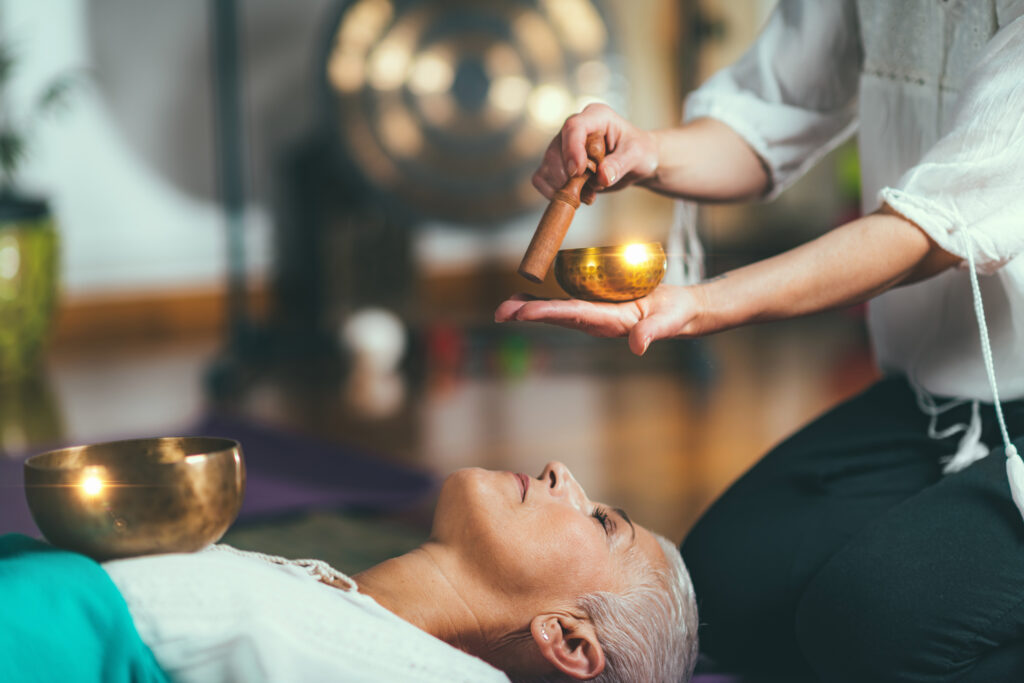
Despite what the name suggests, a sound bath does not involve a tub or water. Instead, you are “bathed” in waves of sound. It is a form of vibrational medicine where participants typically lie down in a comfortable position (Savasana) while a trained facilitator uses specialized instruments to create a soundscape of harmonic frequencies.
Unlike a concert where you are a passive listener, a sound bath is an active, meditative journey. The goal isn’t to follow a melody or a rhythm, but to allow the vibrations to interact with your body’s internal frequencies. This practice has roots in ancient cultures—from Tibetan monks using singing bowls to Indigenous tribes using drums and rattles—but modern science is finally catching up to explain why it works so effectively.
To understand the power of a sound bath, we must look at the human body as a resonant instrument. Our bodies are composed of approximately 70% water, making us excellent conductors for sound waves. When a singing bowl is struck, the vibration travels through the air and directly into our tissues, organs, and bones.
Our brains operate at different frequencies depending on our level of activity. Through a process called entrainment, the brain naturally synchronizes its own frequencies with the external sounds of a gong or crystal bowl. A sound bath helps “downshift” the brain from the frantic Beta state into the restorative Alpha and Theta states.
The vagus nerve is the longest nerve in the body and a key player in the parasympathetic nervous system (the “rest and digest” system). Deep, resonant sounds stimulate the vagus nerve, signaling to the brain that it is safe to relax. This leads to a measurable decrease in heart rate, blood pressure, and cortisol levels.
Sound healing is increasingly being integrated into mainstream medical and mental health protocols because of its wide-ranging benefits. It addresses the “whole person” by targeting both the physiological symptoms of stress and the psychological roots of emotional distress.
The modern world keeps many of us in a state of “sympathetic dominance”—essentially a chronic fight-or-flight response. Sound bath therapy acts as a biological reset button. By lowering cortisol production, these sessions provide immediate relief from the physical symptoms of anxiety, such as chest tightness and shallow breathing.
For those experiencing emotional overwhelm, sound therapy provides a safe container to process feelings that are often too difficult to put into words. The frequencies help to “unlock” stored tension in the body, allowing for a healthy release of repressed emotions and a greater sense of internal balance.
A dysregulated nervous system can lead to a host of issues, including chronic pain, digestive problems, and autoimmune flare-ups. Sound healing promotes Homeostasis, the state of steady internal, physical, and chemical conditions maintained by living systems.
Regular participants often describe a “fog lifting” after a session. By quieting the default mode network (DMN) in the brain—the part responsible for mind-wandering and self-referential thought—sound baths allow for enhanced relaxation and newfound mental clarity.
If you are ready to quiet the noise and begin a deeply restorative healing process, our compassionate team is here to guide the way. Reach out to Cedar Oaks Wellness to inquire about our integrative wellness programs and schedule your first sound bath session in our peaceful forest sanctuary.

A sound bath facilitator (or “sound healer”) uses a variety of tools, each serving a specific purpose in the healing journey:
One of the common misconceptions about sound baths is that you simply “sleep” through them. While it is common to drift into a light slumber, the most profound benefits come from active listening.
This involves maintaining a soft focus on the sounds as they evolve. You might notice the “beat frequencies” created when two similar tones overlap, or you might feel a specific vibration in your chest or limbs. This mindfulness practice trains the brain to stay present, which is a vital skill for anyone navigating recovery or chronic stress.
For individuals struggling with addiction or co-occurring mental health disorders, the internal environment is often chaotic. Substances are frequently used as a way to “self-medicate” a dysregulated nervous system. Sound Bath Therapy offers a non-pharmacological way to achieve that same sense of peace, but in a way that builds health rather than destroying it.
By experiencing deep relaxation without the use of a substance, the brain begins to rewire itself. It learns that safety and serenity are possible from within. This is why sound healing has become such a cornerstone of modern, holistic treatment facilities.
While many enjoy sound baths as a social wellness activity, Cedar Oaks Wellness Center in Oregonia, Ohio, has pioneered the use of sound healing as a sophisticated clinical tool for addiction recovery and mental health treatment.
Located on a secluded 120-acre campus near Cincinnati, Cedar Oaks understands that environment is a vital component of healing. We don’t just treat symptoms; we treat the “root cause” of the struggle. Our sound bath therapy sessions are integrated into a larger suite of Integrative Wellness Therapies designed to restore balance to the nervous system.
At Cedar Oaks, our Sound Bath Therapy offers a deeply restorative experience using crystal singing bowls and chimes to support relaxation and nervous system regulation. Our sessions guide participants into a calm, meditative state where the body and mind can slow down, reset, and restore balance.
This experience is intentionally designed to meet the needs of those in early recovery or those navigating significant life transitions. Potential benefits of our program include:
This experience can be especially helpful for individuals experiencing emotional overwhelm, heightened stress, or difficulty relaxing. In the safe, supportive environment of our 120-acre forest campus, clients can let their guard down.
What makes the Cedar Oaks Wellness approach unique is the “unparalleled professionals” who lead these sessions. Our team understands the nuances of trauma-informed care, ensuring that every sound bath is a safe space for emotional exploration. Whether you are walking our wooded trails or lying in our dedicated wellness space, the goal remains the same: to help you rediscover the peace that already exists within you.
If you are ready to explore Sound Bath Therapy in Ohio, here are a few tips to make your first session as effective as possible:
Sound Bath Therapy is more than a trend; it is a return to the fundamental truth that everything in the universe is in a state of vibration. When we take the time to align our internal frequency with the harmonic tones of a sound bath, we open the door to a level of healing that transcends traditional talk therapy.
In a world that never stops talking, the most transformative thing you can do is lie down, breathe, and listen.
Experience the transformative power of sound healing as a vital part of your personalized recovery journey. Contact Cedar Oaks Wellness today to learn how our sound bath therapy can help you restore internal balance and rediscover lasting peace.